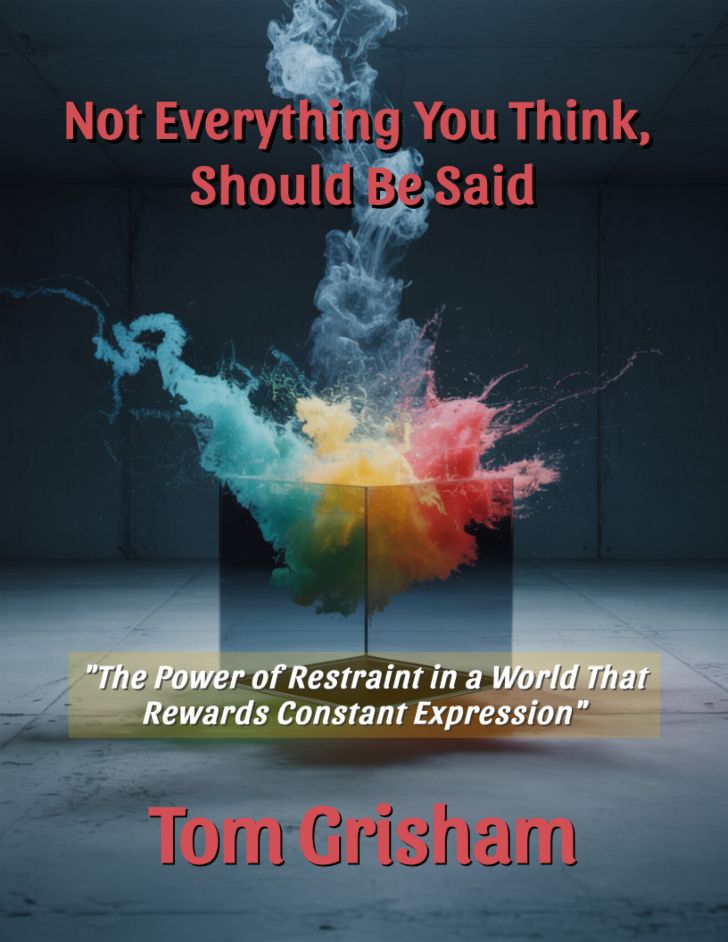
Have you ever noticed how much noise we make just to fill the silence? We live in a world that treats constant expression like a virtue, but often, the most powerful thing we can do is hold our tongue. My new eBook, Not Everything You Think, Should Be Said, is an invitation to explore the quiet strength found in restraint. It is a guide for anyone who has ever regretted a late-night text or felt the sting of a word spoken in haste.
When I was studying liturgy, I learned that silence isn’t just the absence of sound; it is a space where meaning actually takes root. In this book, we look at how to reclaim that space in our daily lives.
What You Will Find Inside
Chapter 1: Listening to the Words We Speak
Most of us talk without truly hearing ourselves or the impact we have. This chapter teaches you how to become an observer of your own speech.
Chapter 2: Evaluating Words That We Use Every Day
We often use common phrases that carry hidden weight we don’t intend. We take a look at the “filler” words that might be diluting your true message.
Chapter 3: The Quiet Discipline of Speaking Less
There is a profound dignity in brevity that commands respect without demanding it. You will learn why the person who speaks the least is often the one people listen to the most.
Chapter 4: Changing Your Life By Speaking Positive
The way we describe our day often dictates how we feel about it. By shifting your vocabulary, you can actually change your internal weather.
Chapter 5: Speaking and Thinking What You Want
Confusion in our speech usually mirrors confusion in our goals. We explore how to align your tongue with your deepest intentions.
Chapter 6: The Words We Borrow and the Ones We Keep
We often parrot the opinions of others without thinking. This is about finding your authentic voice amidst a sea of borrowed cliches.
Chapter 7: Adopting a Right Mindset
A calm mind produces calm speech. We look at the mental frameworks that make restraint feel natural rather than forced.
Chapter 8: Positive and Negative Mindset In The Words You Use
Negative talk can be like a slow leak in a tire. This chapter helps you identify and patch the linguistic habits that drain your energy.
Chapter 9: When Words Come Too Fast
Anger and excitement often outpace our judgment. We discuss practical ways to put a “buffer” between a thought and its expression.
Chapter 10: Choosing and Speaking Our Words Carefully For Success
Precision is the hallmark of a leader. Learn how to craft sentences that move projects and people forward.
Chapter 11: Speaking Success in Finances and Career Path
Negotiation and networking require a specific kind of verbal discipline. We look at how to talk about value and ambition with quiet confidence.
Chapter 12: Saying What You Actually Mean
Vague speech leads to vague results. This chapter is about the bravery required to be clear and direct with others.
Chapter 13: Advantages and Disadvantages Of Spoken Words
A word once spoken can never be pulled back. We weigh the long-term cost of our utterances against the short-term release of saying them.
Chapter 14: Attributes To One’s Ability To Speak
Good speaking is a combination of empathy, timing, and vocabulary. We break down the traits that make a person truly articulate.
Chapter 15: The Words We Say When No One Is Around
Our internal monologue is the most important conversation we ever have. This final look focuses on how we talk to ourselves in the dark.
Restraint is not about being timid; it is about being intentional. When we stop leaking our energy through unnecessary talk, we find we have much more to give to the things that matter.
The most important things are usually found in the spaces between the words.